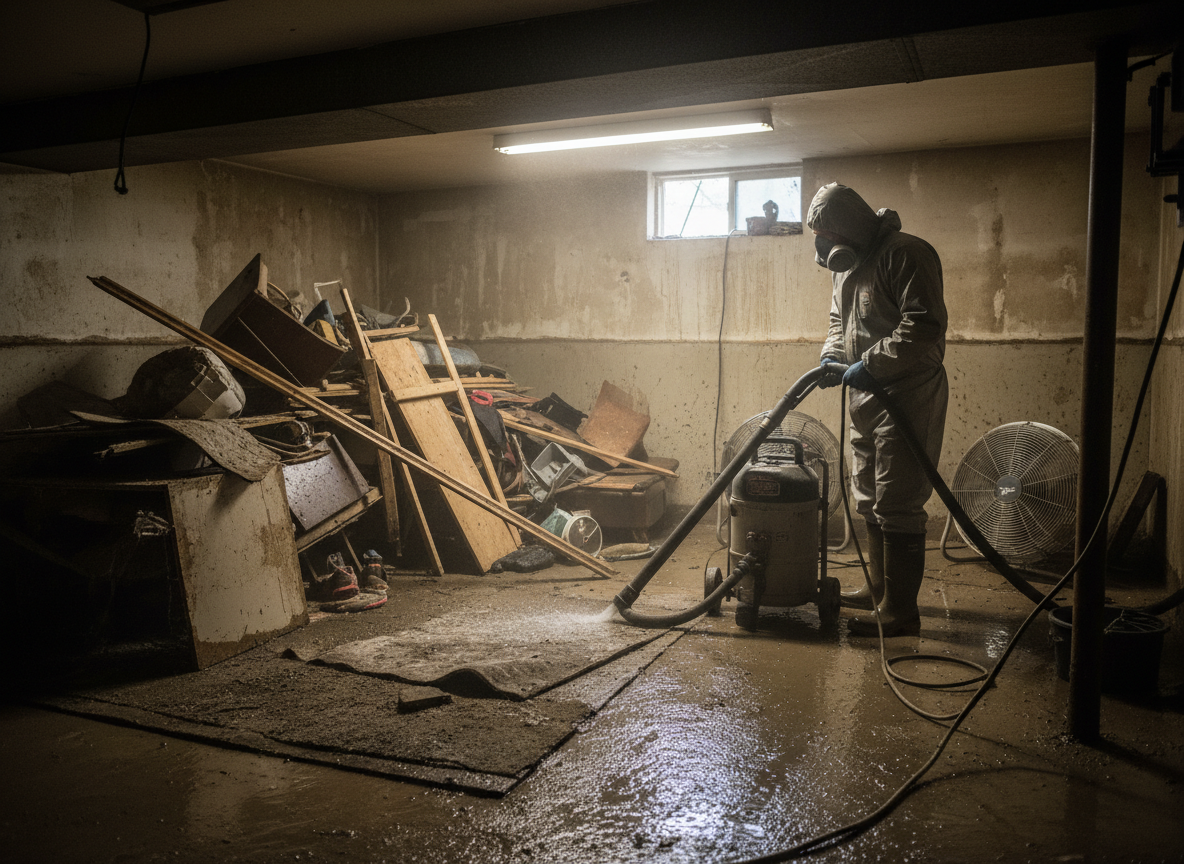
Franklin sits in Merrimack County with a mix of historic homes near the Franklin Opera House and Daniel Webster Birthplace plus later builds that often have full basements or crawl spaces. Cold snowy winters followed by rapid spring thaw send water along the terrain into low-lying areas, saturating older plaster walls and wooden joists that absorb and hold moisture longer than modern materials. When floodwater enters these structures it travels behind baseboards and under hardwood floors, creating hidden pockets that must be opened and dried to prevent secondary issues.
The four-season climate means summer thunderstorms can overwhelm older storm drains in Downtown Franklin while winter freeze-thaw cycles crack foundations, allowing groundwater to seep in steadily. Technicians working these jobs routinely pull carpet pads and insulation that have wicked water upward several feet, then use air movers and dehumidifiers sized for the square footage and local humidity levels that linger after warm summer rains. Properties closer to Laconia or Tilton roads sometimes see runoff from higher ground that carries silt into finished basements, requiring extra extraction passes and antimicrobial treatment on porous surfaces.
Edge cases appear in homes with knob-and-tube wiring or original lath-and-plaster where cutting access holes must be minimized yet still allow proper drying. Crews document moisture readings at multiple depths in walls and floors before and after equipment placement because incomplete drying in these older builds leads to recurring problems months later when humidity rises again.
Technician insight
In Franklin the thing that catches most people out with Flood Damage Cleanup is how quickly meltwater from heavy winter snow packs travels under older Downtown Franklin foundations and soaks the dirt floors in cellars that were never meant to stay dry. Homeowners often stop at the visible puddle and miss the moisture that has already wicked two feet up plaster walls near the Franklin Opera House, which then shows up as musty smells the next time humidity climbs.
Downtown Franklin Cellar After Spring Thaw
Rapid snow melt sent water under a 1920s home near the Franklin Opera House. We found saturated dirt floors and water behind original plaster up to eighteen inches. Extraction and targeted drying prevented mold growth in the lath cavities before the next warm spell raised humidity.
Flood Damage Cleanup Services We Offer
✓Basement Flood Extraction
Removes standing water from Franklin basements using submersible pumps sized for the volume, followed by immediate moisture mapping to locate trapped water behind walls.
✓Sewage Backup Cleanup
Handles contaminated floodwater from municipal backups common after heavy rain in older Downtown Franklin lines, including full removal and disinfection of affected surfaces.
✓Carpet and Flooring Drying
Extracts water from saturated carpet, pad, and hardwood in Merrimack County homes then places targeted drying equipment to prevent cupping and mold in seasonal humidity.
✓Structural Drying and Dehumidification
Sets up commercial air movers and dehumidifiers calibrated for Franklin's post-storm humidity to pull moisture from joists, plaster, and insulation without over-drying fragile historic materials.
✓Content Restoration From Flooded Areas
Cleans and dries salvageable furniture, documents, and household items removed from flooded rooms in homes near the Daniel Webster Birthplace before returning them to the property.
Flood Damage Cleanup Cost in Franklin, NH
| Service | Typical Range | What Affects It |
|---|---|---|
| Initial Assessment And Extraction | $250–$600 | Varies with basement size and water depth |
| Full Structural Drying Package | $800–$2,200 | Number of rooms and equipment days required |
| Sewage Contaminated Cleanup Add-On | $400–$900 | Extra PPE and disposal steps |
| Content Cleaning And Drying | $150–$500 | Volume and type of items |
Ranges are typical for Franklin, NH and confirmed with an exact written quote before any work starts.
How it works
- 1
Safety And Initial Assessment
Shut off power and gas where needed, then walk the property with moisture meters to map water migration through older construction in Franklin.
- 2
Water Removal
Extract standing water and saturated materials using pumps and wands sized for the job volume typical after snow melt or summer storms.
- 3
Drying Setup
Place air movers, dehumidifiers, and heaters in patterns that reach hidden cavities behind walls and under floors common in local housing stock.
- 4
Final Verification
Take post-drying readings and remove equipment once levels match unaffected areas, then advise on any needed follow-up repairs.
Pricing
Cost depends on water volume, affected square footage, and whether contamination is present.