Older homes near the Franklin Opera House and Daniel Webster Birthplace often feature plaster walls and uninsulated attics that trap condensation once winter temperatures drop below freezing and spring snowmelt raises indoor humidity. Mold takes hold in these cavities when roof leaks or ice dams go unnoticed, spreading along lath and into floor joists. Remediation requires removing affected plaster sections rather than surface treatments alone, then drying the structure with equipment sized for the tight floor plans common in these neighborhoods.
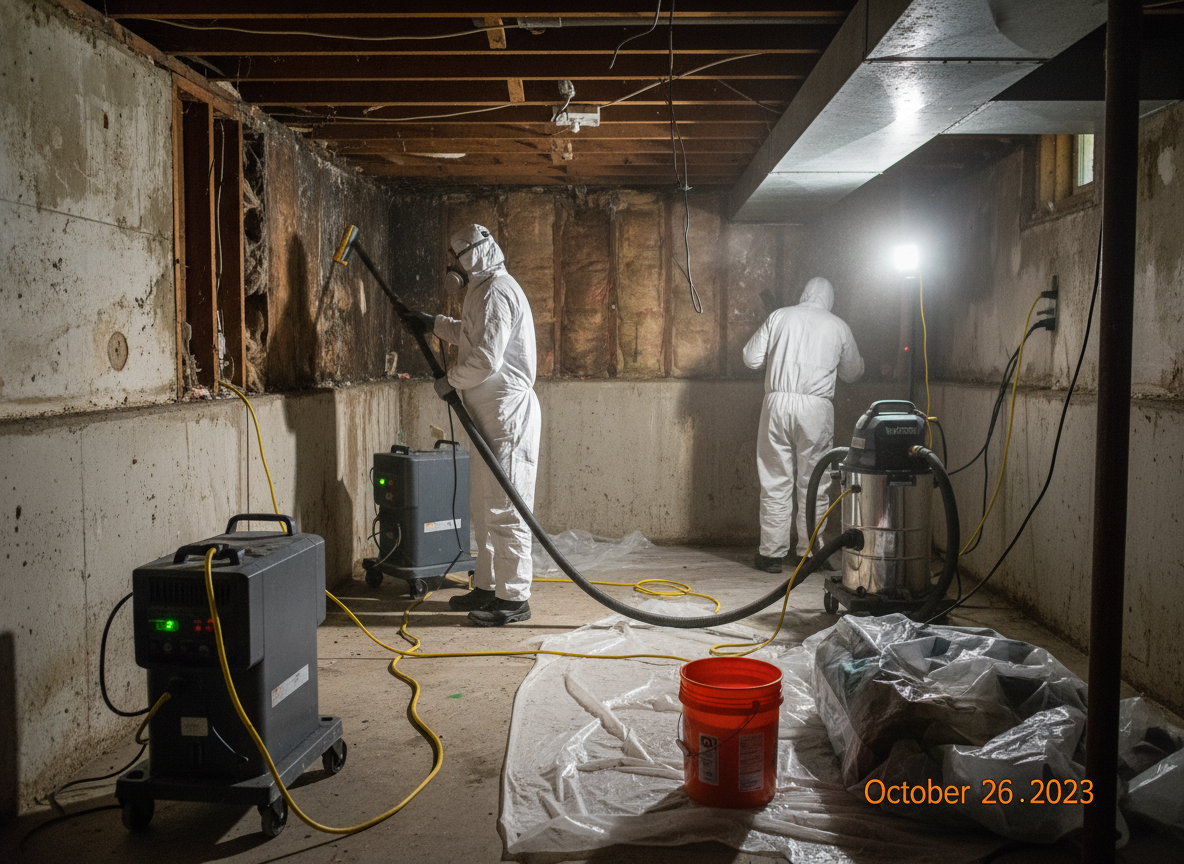
Merrimack County terrain slopes toward the Winnipesaukee River corridor, so basements in Tilton and Laconia road homes sit close to seasonal water tables. After heavy spring rains or rapid snowmelt, groundwater seeps through fieldstone foundations common in pre-1950 construction. We isolate the affected rooms, contain the space with plastic barriers sealed to the joists, and use negative air machines to prevent spores from migrating into living areas while we remove saturated insulation and treat framing.
Warm summer humidity in the region keeps crawl spaces under many Downtown Franklin properties moist even after visible water recedes. Homeowners often mistake musty odors for normal basement smells until black staining appears on sill plates. Proper remediation includes installing vapor barriers over dirt floors and sealing rim joists to break the moisture cycle that restarts every fall when heating systems turn on.
We document moisture readings at multiple depths in framing before and after work so property owners can see the difference between surface drying and actual structural drying. This step prevents callbacks when hidden pockets of moisture later trigger new growth behind baseboards or under subfloors.
Technician insight
In Franklin the thing that catches most people out with Mold Remediation is hidden moisture behind plaster in homes built before 1940 near the Daniel Webster Birthplace. Once winter snow sits on the roof for weeks, meltwater finds its way into the wall cavities and stays there until summer humidity wakes it up. Homeowners spray bleach on the visible spot and think the problem is solved, but the real growth is still feeding on the back side of the lath.
Downtown Franklin Basement After Spring Thaw
A homeowner in a pre-war house two blocks from the Franklin Opera House noticed a musty smell after rapid snowmelt. We found mold along the fieldstone foundation where groundwater had wicked up into the plaster. After mapping moisture through the sill plates we removed the lower three feet of plaster, treated the framing, and installed a sealed vapor barrier over the dirt floor. Readings stayed dry through the following summer.
Mold Remediation Services We Offer
✓Basement Mold Remediation
Removes mold from fieldstone and concrete basements common in Downtown Franklin after spring snowmelt raises groundwater levels.
✓Attic Mold Removal
Addresses condensation mold in uninsulated attics of older Merrimack County homes once ice dams melt and leak into rafters.
✓Crawl Space Mold Treatment
Treats dirt-floor crawl spaces under Tilton and Laconia road properties where summer humidity feeds growth on sill plates.
✓Plaster Wall Mold Remediation
Removes mold from lath-and-plaster walls in historic Franklin homes without damaging original trim or Opera House district architecture.
✓Post-Flood Mold Cleanup
Handles mold that follows river or stormwater flooding in low-lying Merrimack County neighborhoods after heavy seasonal rains.
Mold Remediation Cost in Franklin, NH
| Service | Typical Range | What Affects It |
|---|---|---|
| Small bathroom or closet | $600–$1,200 | Limited to one contained room with surface growth only. |
| Basement section under 200 sq ft | $1,400–$2,800 | Includes insulation removal and vapor barrier install. |
| Attic with rafter staining | $1,800–$3,500 | Varies with ice dam damage extent and access difficulty. |
| Full crawl space treatment | $2,200–$4,000 | Dirt floor sealing and sill plate work increase cost. |
Ranges are typical for Franklin, NH and confirmed with an exact written quote before any work starts.
How it works
- 1
Moisture Mapping
We use meters to check plaster, joists, and subfloors throughout the affected rooms, noting readings tied to the home's age and foundation type.
- 2
Containment Setup
Plastic barriers are sealed to ceilings and floors to isolate the work zone from the rest of the house before any material removal begins.
- 3
Material Removal
Saturated insulation, baseboards, and sections of plaster or drywall are cut out and bagged for disposal while negative air runs continuously.
- 4
Antimicrobial Application and Drying
Treated surfaces receive an antimicrobial coating, then commercial air movers and dehumidifiers run until moisture readings return to normal.
- 5
Final Clearance
We recheck all previously wet areas and provide written moisture logs before removing containment.
Pricing
Pricing depends on square footage affected, whether plaster or insulation must be removed, and how many rooms require containment.